



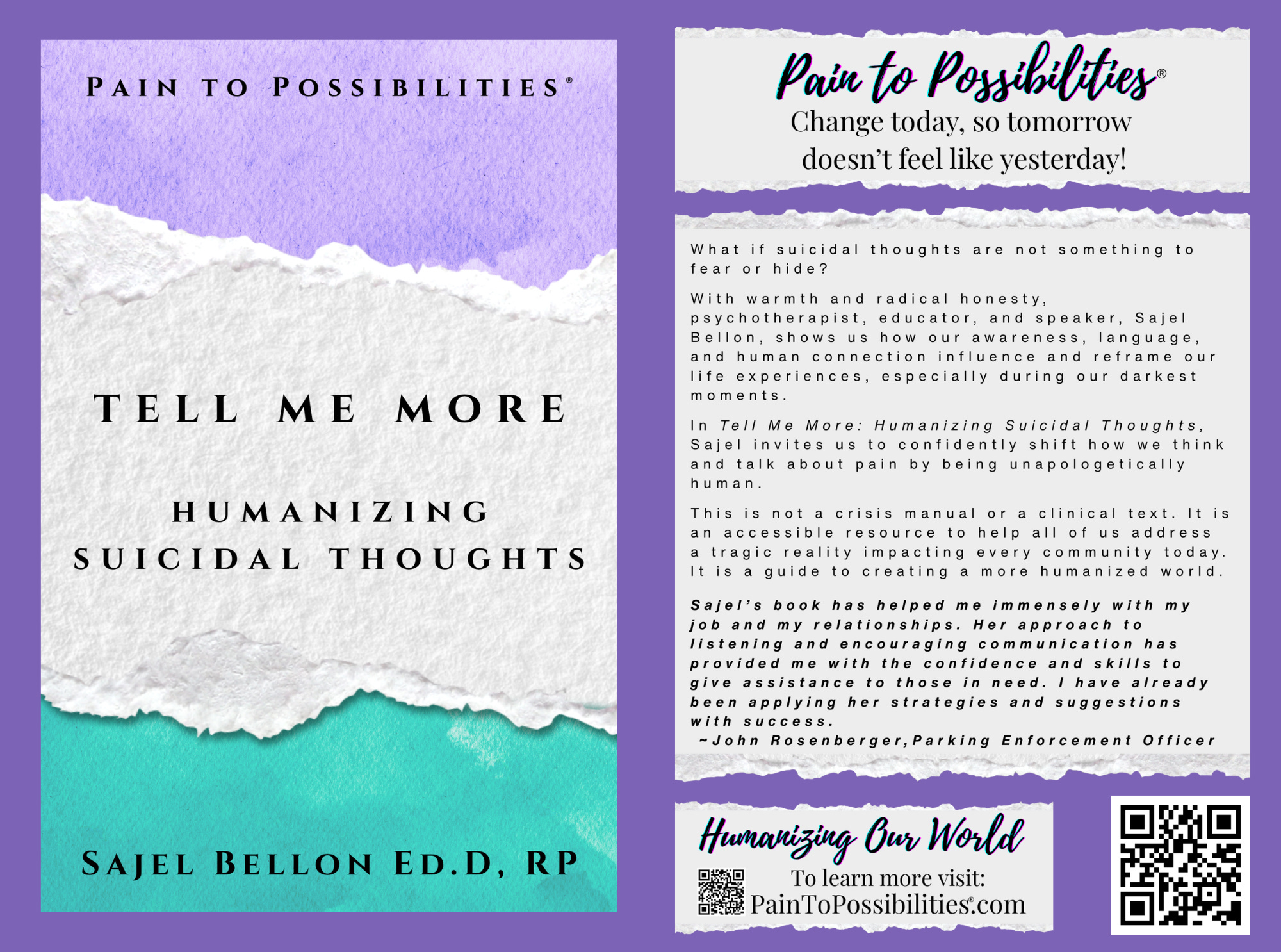
Have you ever witnessed that moment when someone is just about to say something and then chooses to swallow it instead? There may even be an awkward pause, the uncertain look away wondering how it will land or whether it will be safe to share. These are the kinds of moments that have inspired the Tell Me More book.
When it comes to our most difficult types of conversations, like suicide or suicidal thinking, many people are afraid of saying the wrong thing, doing the wrong thing, or making things worse. So, when it comes to these kinds of uncomfortable topics, we would rather err on the side of caution and stay quiet, soften the language, divert from the subject, or avoid the conversation all together. It is not that we don’t care, but we silently tell ourselves that someone else will handle it, or that we will tackle it when it gets really serious. Meanwhile, people continue to carry unbearable toxic thoughts and emotional pain in plain sight, while maybe surrounded by others who care about them but do not know how to reach out or when.
We have built a culture where stigmatized or taboo topics are only addressed when they MUST be. For example, in emergency situations when they appear out of nowhere and must be dealt with during moments of crisis. We have normalized silence, shame, and stigmas. In doing so, we are missing the opportunities to humanize, intervene, and make a difference before these uncomfortable or difficult situations get out of control or it is too late.
Are you one of the many people who are exhausted from pretending that everything is fine when it is not? A parent lying awake at night? A colleague noticing changes but feeling unequipped to deal? A friend or relative sensing distance and not knowing how to bridge it? A spouse watching your partner fade and not knowing what to say?
When I first shared with my network that I was writing Tell Me More, I had hoped it would resonate with even just one person. Instead, I heard from many, both privately and publicly, sharing personal stories like how they lost someone and wish they had the words back then. Or how the strategies in the book have helped to make them more confident communicators. This only validated for me that the book is timely and needed. There are so many relevant contexts in which it can benefit our shared human experiences and interactions.
Humanizing how we communicate and having common language long before someone reaches a breaking point is critical in creating the psychological safety that is beneficial to all of us. Also, learning how to stay present when things feel uncomfortable, not being distracted by toxic thinking patterns, helps us to build protective factors like connection much earlier on. It gives people permission to slow down and show up as unapologetically human without the pressure of being perfect.
This is a guide for parents and teachers who want to care and protect without being controlling or overstepping. For friends and family who want to support without panicking. For anyone who wants to feel better equipped to do or say something.
This is an invitation to learn a shared language, to build communities where people feel safe to be seen or heard, and to be part of a movement toward a more humanized world. Please consider sharing Tell Me More as a life skill building resource for our organizations, school systems, and communities. When we humanize how we communicate, we change outcomes. When we change outcomes, we save lives.
If you would like to share a story or have a question, please leave a comment below.
For more ways to reconnect with yourself, others, and more humanized life, follow PainToPossibilities.com on #Substack.
Find more information about Mind Armour® Services & Training Programs
Now Available on AMAZON:
To stay updated about the release of the latest
Pain to Possibilities® Publications share & subscribe!
Thank you ❤️